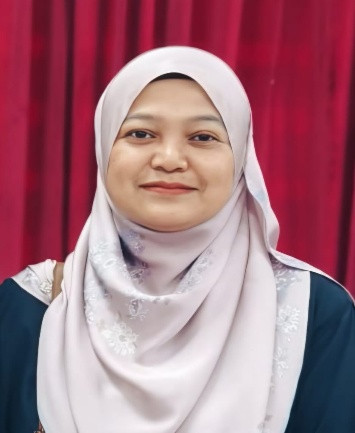
Prof. Doan Pham Minh, Ecole Nationale Supérieure des Mines d'Albi, France
Doan PHAM MINH received his PhD degree in chemistry at the University Lyon 1, France in 2006. After post-doc experiences at French Institute of Petroleum and IRCELYON (France), in 2009, he has joint IMT Mines Albi as assistant professor, affected at the RAPSODEE research center. Since 2011, he is associate professor at IMT Mines Albi where he has led (2016-2021) a research team composed of 5 permanent staffs and around 15 PhD students and post-doc. Currently, he is Full Professor at IMT Mines Albi. In parallel with teaching activities, he focuses his research on the development of performing functional materials applied in the energy and environment fields. He mostly works on new catalysts and catalytic process engineering for the valorisation of biomass, bio-wastes and industrial coproducts into energy carriers, e.g. syngas, hydrogen, methane, alternative fuels etc., as well as on refractory ceramics applied in high-temperature sensible thermal energy storage. He is principal investigator (PI) and co-PI of more than 50 research projects, and is supervisor and co-supervisor of 27 PhD students, 13 post-docs and research engineers and 36 internships. He is currently editorial board member of Waste and Biomass Valorization (Springer), and co-organizer of the Summer School in Catalysis which is held every two years since 2019

Prof. Robert Dylewski, University of Zielona Góra, Poland
Robert Dylewski is a Deputy Director of
the Institute of Mathematics at the University of Zielona Góra. He is
the head of the Department of Applied Mathematics.
His research in recent years has mainly concerned sustainable
construction and energy efficiency in the construction sector. He deals
with economic and ecological assessment of thermal modernization
investments. The results of the research have been published, among
others in journals: Building and Environment, Energy and Buildings,
Energies, Sustainability, Journal of Cleaner Production and Renewable
and Sustainable Energy Reviews.
He was awarded first place in the Scholar GPS 2025 ranking in the
"Thermal insulation" specialty
(https://scholargps.com/scholars/58409606078639/robert-dylewski).

Prof. Florin Bode,Technical University of Cluj-Napoca, Romania
Biography: Florin Bode is a Full
Professor of Fluid Mechanics and CFD method at the Technical University
of Cluj-Napoca and Director of the AtFlow Research Center. He graduated
as a Mechanical Engineer in 2004 and earned his Ph.D. in the same field
in 2010, focusing on thermo-fluid dynamics in swirl burners. Between
2011 and 2013, he held a post-doctoral fellowship at the Technical
University of Civil Engineering Bucharest, where he specialized in the
development of innovative ventilation systems for buildings and the
automotive industry. His primary research interests include heat and
mass transfer, indoor air quality, thermal comfort, and fire dynamics.
He has extensive expertise in applying advanced Computational Fluid
Dynamics (CFD) techniques to optimize energy systems and evaluate smoke
evacuation strategies. Throughout his career, Prof. Bode has authored
over 170 scientific articles, including more than 45 papers indexed in
the Web of Science with impact factors and over 130 Scopus-indexed
publications. He has also published three books as lead author and
contributed to several others in the fields of thermodynamics and
combustion. As a Principal Investigator, he has led six national
research grants and managed numerous industrial contracts with partners
such as Renault Technologie Roumanie and Therme Group. He has been a
member of more than 10 Horizon 2020 EU projects and serves as a
recognized reviewer for over 30 high-impact journals, including Building
and Environment and the International Journal of Heat and Mass Transfer.
In addition to his research, he has held leadership roles in
international academic circles, serving as the President of the EENVIRO
2022 and 2024 conferences and as a member of the Scientific Committees
for various global events like COBEE and PEPM. Prof. Bode is an active
member of several professional organizations, including IAQVEC, ASHRAE,
and ISIAQ. He is also a certified energy auditor and a member of the
Romanian national body of experts for research and development in the
field of energy and mobility. His work continues to focus on finding
sustainable thermal engineering solutions for modern industrial and
residential challenges.

Dr. Aineias Karkasinas, University of Strathclyde, UK
Dr. Aineias Karkasinas is a
sustainability engineer at the National Manufacturing Institute Scotland
(NMIS). He holds a BSc and an MSc in Mechanical Engineering with a
specialization in Industrial Management and Operational Research from
the National Technical University of Athens (NTUA). He also earned a PhD
in Design, Manufacture, and Engineering Management from the University
of Strathclyde, focusing on “A Multicriteria Decision Support Method for
Assessing Circular Economy Pathways of End-of-Life Products.” His
research and publications cover areas including remanufacturing
assessment, remanufacturability, circular economy, verification and
validation, as well as the development of industry-focused white papers.
His work supports sustainable manufacturing practices and advances
strategies for the transition to a circular economy.

Prof. Banjie Sarmiento,Mapua Malayan Colleges Laguna, Philippines
The researcher’s academic background includes a Bachelor of Science in Biology, with a specialization in Cell Biology, from the University of the Philippines Los Baños (UPLB). She subsequently earned a Master of Science in Natural Resources Conservation, focusing on Biodiversity Conservation, from the same institution. Her dissertation centers on the climate resilience of coconut agroecosystems in Luzon, Philippines, as part of her Ph.D. in Environmental Science with a cognate in Agronomy at UPLB. She is the BS Biology Program Chair at Mapúa Malayan Colleges Laguna, Philippines. Over two decades of teaching experience have strengthened her dedication to advancing knowledge in environmental science, biodiversity conservation, education, agriculture, and disaster risk reduction and management. Her research endeavors are guided by principles of sustainability and are aligned with the United Nations' Sustainable Development Goals (SDGs), which aim to improve the quality of life for individuals while addressing environmental challenges and promoting sustainable development. She has received numerous awards and grants, including the 2025 International Publication Award for a Scopus-indexed article on disaster risk reduction, and was recognized as an Outstanding Educator in Science by the Lumina Foundation in 2023. She is also a member of several professional organizations, such as the National Research Council of the Philippines and the Philippine Institute of Environmental Planners. Prof. Banjie G. Sarmiento is a registered Environmental Planner (EnP) and a Licensed Professional Teacher (LPT).
Speech title "Artificial Intelligence for Biodiversity Conservation"
Abstract-Biodiversity is a cornerstone of planetary health and
resilience. It sustains ecosystems, supports human well-being, and
maintains ecological balance. However, biodiversity faces unprecedented
threats from habitat destruction, climate change, pollution, and human
activities. Addressing these challenges requires innovative and
effective solutions. Artificial Intelligence (AI) has emerged as a
powerful tool with the potential to revolutionize conservation efforts.
This presentation will explore the critical role of AI in biodiversity
preservation. AI’s ability to process large volumes of data enables it
to monitor ecosystems in real-time, identify patterns, and predict
environmental changes with remarkable accuracy. These capabilities allow
for early detection of threats, facilitating timely interventions.
We will delve into various practical applications of AI in conservation.
For example, species identification through image and sound recognition
helps track wildlife populations. Remote sensing technologies enable
detailed habitat mapping, providing essential data for habitat
management. Additionally, predictive modeling informs policymakers by
forecasting environmental trends and assessing the impact of
conservation strategies. These technological advances enhance resource
allocation and improve the effectiveness of conservation initiatives.
However, integrating AI into conservation efforts is not without
challenges. Issues such as data biases, technological limitations,
privacy concerns, and potential misuse need careful consideration.
Ethical aspects—including transparency, inclusivity, and respect for
indigenous knowledge—must also be addressed to ensure responsible
implementation.
Looking to the future, AI holds immense promise for biodiversity
conservation. Its success depends on collaborative efforts among
scientists, policymakers, and local communities. By fostering
responsible innovation and overcoming current obstacles, AI can become a
vital tool in safeguarding our planet’s rich biological diversity for
generations to come.s
Copyright © 2026 12th International Conference on Environment and Renewable Energy (ICERE 2026). All rights reserved.